 TIẾNG VIỆT
 High costs hurdle to recycling in textiles
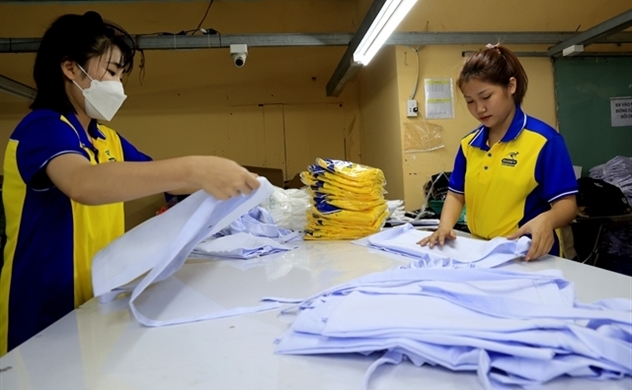
Recycled material content in many textile products had reached 60 per cent in Vietnam. Photo by VNS
Recycled material content in many textile products had soared to 60 per cent.
Textile producers see recycling as the go-to solution to the environmental woes in the industry, but they are facing some obstacles to turning waste into value.
Hua Phu Doan, Deputy Director of the Vietnam Waste Recycling Association, underlined several obstacles in the way of producers trying to recycle waste.
The first obstacle involves manual sorting, which has significantly driven up the cost of recycling. Another obstacle centres around the lack of systematic sourcing of waste for efficient recycling.
Doan's concern over high recycling costs was shared by Tran Thi Tra My, a presentative from VietKai LTD. She said producers had to import environmentally friendly materials from China because few factories in Vietnam can produce the materials at low costs.
"Lack of cutting-edge technology is the reason behind the cost disadvantage of local recycled materials over those from China," said My.
Lien Phuong Textile & Garment Corporation (LPTEX) is a producer that has to import recycled fibres from China and recycled wool from Australia for reasons of costs.
LPTEX CEO Phoebe Truong said products made completely of recycled polyester normally had lower purity than those made of virgin material. Because of that, the former had been mixed with some virgin material to make a final product acceptable in the market.
Recycled material content in the mixture could vary from 30 per cent to 70 per cent depending on customer preference.
"Japanese partners often require products with 30 per cent of recycled polyester, whereas European partners ask for 30 per cent of recycled wool.
"If it hadn't been for the preferential tariffs under free trade agreements such as EVFTA and CPTPP, products with recycled material content made by Vietnam could not have rivalled those by China," said Phoebe Truong.
The CEO also said her company and its Korean suppliers were cooperating to produce fibres that can biodegrade in two to three years. However, they were not sure whether the fibres would gain favour among Vietnamese consumers.
Le Thi Ngoc Dung, Manager of A Chau Environment LTD, underlined two factors holding back the recycling industry in Vietnam. One factor involves the poor understanding of the notion among a large part of producers and consumers; and the other, high recycling costs.
She said Vietnam had not kept up with the global norms in recycling technology. As a result, few recycled products could be made at low costs in the country. Most of the time, their costs are higher than those of similar products in China and Bangladesh, putting Vietnamese producers at a disadvantage, according to Dung.
Vu Duc Giang, Chairman of the Vietnam Textile & Apparel Association, said textile producers had begun to use recycled materials in production to answer the green call from foreign importers. Recycled material content in many of their products had soared to 60 per cent.
The Chairman called for favourable policies to help textile producers expand their customer base for products with recycled material content.
He also said the association was urging the government to issue guidance on Textiles Strategy Between 2021 and 2035, with reference to which local authorities can develop their masterplan on up-to-environmental-standard industrial zones.
Source: VNS

_131447820.png)