 TIẾNG VIỆT
 Doing business in Laos
Ảnh: investasian.com
There was no arrangement. Writer of this story visited three homestays - Mekong Riverside, Anna and Liberty Place, during a recent trip to Laos. They are all under management of Vietnamese.
They have been here for years and now own their hotels, like the owner of the Mekong Riverside. Other newcomers decided to start a business here. The owner of the Liberty Place, who was born in 1993, is an example.
After years working for a foreign company in Hanoi, he decided to go to Laos. He rents the Liberty Place and became self-employed. He invested and reorganized the business, the Liberty Place is now one of the most favorite places to stay in Luang Prabang, reaching 9.1 points, according to Booking.com.
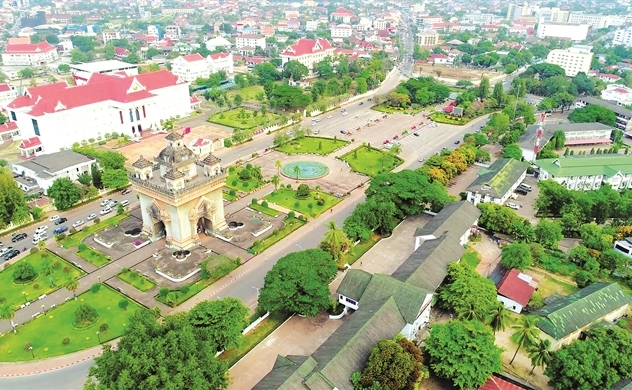
The Southeast Asian country has become a popular tourist destination in recent years. In 2018, the country received more than 4.1 million foreign visitors, up 8.2% year over year, according to the statistics from the Ministry of Information, Culture and Tourism of Laos.
Based on the population proportion, Laos is the country that receives the largest number of foreign tourists in the region. By 2020, the number of foreign visitors to Laos is estimated at over 6.2 million, bringing about $993 million in revenue.
Despite the number of foreign tourist keeps increasing, the country has only 670 hotels and 2.432 guesthouses, according to the data from the Ministry of Information, Culture and Tourism of Laos. This encourages Vietnamese to join the country’s tourism industry.
Several years ago, some Vietnamese enterprises such as Hoang Anh Gia Lai and Muong Thanh made bold investments in the hotel industry. After two years of putting into operation, the first 5-star hotels here named Crowne Plaza, BIM Land have recently planned to expand the number of hotel rooms and serviced apartments in Vientiane.
Besides tourism, agriculture, mining, hydroelectricity, commerce, services, food and cuisine also attract Vietnamese investors. Typically, Dao Heuang Company, an investment project of Le Thi Luong has become the most prominent private economic group in Laos.
This company operates in various fields including agriculture, cofee processing, green tea, duty-free shops, hotels, consumer goods, bottled pure water production, bottled tea, dried fruits.
Her corporation's Dao cafe brand has been introduced in several countries including Vietnam, Thailand, Singapore, China, and Japan.
Besides, Pho Zap, Dong Xanh, Hoang Kim restaurants run by Vietnamese people are in good business here.
The Director of the Ho Chi Minh City Trade and Investment Promotion Center Pham Thiet Hoa assessed that business environment in Laos was similar to Myanmar, when the country began its development period. The demand for goods, services and equipment has increased significantly.
Laos has a population of over 7 million, smaller than a third of Ho Chi Minh City's population. With its culture distinguished with a pure Buddhist lifestyle, Laotian has peaceful characteristics. Therefore, Laos is not an attractive market for consumer goods and shopping.
It’s why H&M, Zara and F&B chains do not choose Laos for business. However, Laos with high import demand creates opportunities for commodites from other countries.
In order to boost business opportunities with Laos, Hoa said that Ho Chi Minh City organized more than 30 trade promotion activities in many localities of Laos during the past three years.
Recently, ITPC cooperated with the Vietnamese Consulate General in Laos, the Consulate General of Laos in Ho Chi Minh City and the Department of Industry and Trade of Savannakhet Province to organize a trade fair in Laos.
Vietnamese enterprises installed more than 200 booths to showcase their products during the fair. The effort has contributed to the continuous growth of bilateral trade between the two countries. In the first 7 months of this year, bilateral trade reached $663.7 million , up 13.1% over the same period last year.
However, insufficient information on the Laotian market, limited operation at the border markets, downgraded infrastructure have been obstacles for the Vietnamese goods from seizing bigger market shares in Laos.
Thailand currently holds about 90% of the gasoline market share in Laos while Vietnam's figure is only 7-8%. For cement, Vietnam accounts for 28-29%, and Thailand holds 66%, according to the Vietnam Ministry of Industry and Trade,
Vietnam currently ranks behind Thailand and China in total investment in Laos. Competing with China, Thailand is a big challenge for Vietnamese individuals and enterprises to do business in the market.
In addition, investment in Laos is also expected to be difficult when the investment environment and economic development in this country are underestimated due to lack of transparency, mechanisms and information.
Same category news
-
-
 Huyen Hoang
 -