 TIẾNG VIỆT
 Amazon, Alibaba Race for Winning Part in Vietnam E-commerce Market

Photo: Internet
Alibaba, a China's leading e-commerce corporation, recently unveiled its plan to organize a big connecting event for Vietnamese businesses in October. Earlier, Amazon promised to create effective retailing platforms for brands coming from Vietnam.
Business-to-business e-commerce is the area in which Alibaba and Amazon are competing fiercely in Vietnam. Previously in mid-August, while launching Amazon Global Selling Vietnam, Amazon announced that it is aiming at supporting small- and medium-sized enterprises here.
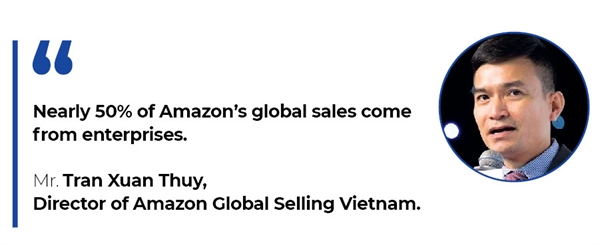 |
“Now nearly 50% of Amazon's global sales come from enterprises. I think this percentage will increase when local businesses have better advantages,” said Tran Xuan Thuy, the Director of Amazon Global Selling Vietnam.
 |
| Photo: nbcnews.com |
Alibaba has also developed its B2B e-commerce network in more than 190 countries and territories. The number of commercial brokers, traders, retailers, manufacturers and small-and medium-sized enterprises on Alibaba.com has exceeded 150 million.
In particular, the number of enterprises having regular transactions on the Alibaba platform reached more than 10 million. Of course, Alibaba will never accept this position. It is planning to promote for wider and deeper operations in the international market. Alibaba recognized potential that 71% of small- and medium-sized enterprises in the world has not been aware of online sales.
In Vietnam, potential for B2B e-commerce is estimated as huge. The Ministry of Industry and Trade’s report of E-commerce Index shows only 32% Vietnamese small and medium enterprises establish business relationships with foreign partners through online channels. This percentage is expected to increase sharply since the number of small- and medium-sized enterprises, which need to export directly through B2B e-commerce channel is huge, accounting for 98.1%, according to data from the Vietnam General Statistics Office.
The United Nations Conference on Trade and Development (UNCTAD) forecasts by 2020, the total value of cross-border e-commerce will reach $994 billion, nearly doubling compared to 2017.
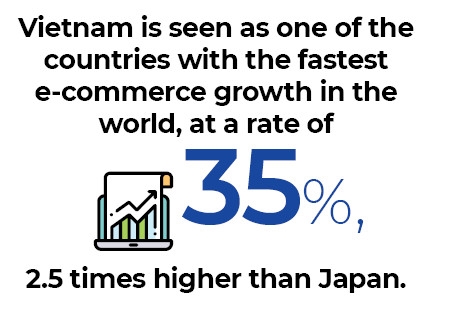 |
In Asia-Pacific alone, the E-commerce value reached $476 billion. Vietnam is seen as one of the countries with the fastest e-commerce growth in the world, at a rate of 35% per year, 2.5 times higher than Japan.
According to Nguyen Quang Huy, deputy head of Agency for Southern Affairs under the Ministry of Industry and Trade, B2B e-commerce, especially online cross-border transactions is becoming an important channel for export.
By joining the B2B e-commerce platform, businesses can reach several customers around the world, thereby expanding export markets, reducing costs related to traditional trade promotion such as Join fairs, exhibitions, set up offices in the target market.
Looking around the market, creating platform for B2B e-commerce seems to be vacant. For instance, the development strategy by Tiki, Lazada is focused on Marketplace. Shopee, Adayroi, Sendo, B2C e-commerce platforms have also integrated B2B trading platform but are quite lackluster.
Meanwhile, deploying B2B trading platform is the advantage of Amazon or Alibaba. These corporations have so far established a large and closed ecosystem, from developing member networks around the globe to organizing support services such as import and export procedures, payment tools, logistics, etc.
Right now, in the Vietnam market, Amazon planned to support 100 local small and medium enterprises to reach more than 300 million Amazon customers in 185 countries around the world. Thanks to Amazon, several domestic products have been introduced to the world such as coffee filters, Sao Vang balm, Trung Nguyen coffee, palm-leaf conical hats, flat palm hats.
Through agents and indirect investments, Alibaba has been in Vietnam for more than 5 years.
Recently, it has set up a representative office in Vietnam and cooperate with Fado to provide consulting services in sales, logistics, financial and legal solutions and some other fields to Vietnamese businesses who want to participate in cross-border e-commerce.
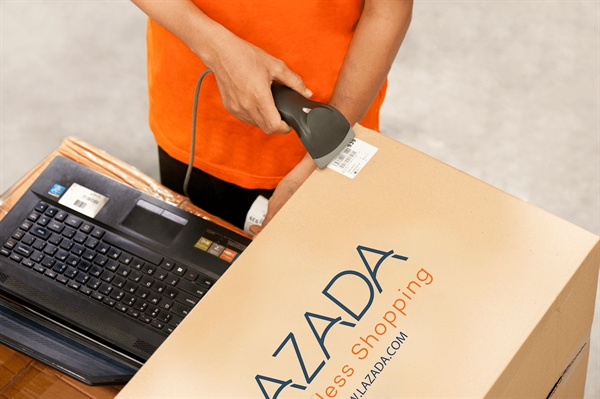
Within 3 years, Alibaba spent $4 billion to own 83% shares of Lazada in Vietnam and Southeast Asia countries, showing the group's ambition to expand internationally.
 |
| Photo: Sapo.vn |
According to Jyotika Ahuja, Communications Manager of Alibaba Group, enterprises in Vietnam in particular and in other countries in general are still confused about transactions on the internet, payment methods, legal procedures, import and export, logistics, how to evaluate shopper's reputation, how to handle trade disputes and some other concerns.
If receiving support timely and completed guidance, Alibaba believes that the businesses will get a number of opportunities and have chance to increase trading, exporting goods via Alibaba.com.
Currently, enterprises operating in the sectors of apparel, handicrafts, interior decorations, ceramics, food, etc. have the advantage of B2B e-commerce thanks to the advantage of products and competitive prices.
Same category news
-
-
 Huyen Hoang
 -